
Don’t gamble with specifications. Understand the critical differences in fastener grades to ensure the safety and longevity of your global projects.
Introduction: When “Good Enough” Isn’t Enough
In high-stakes industries—oil and gas, heavy construction, marine infrastructure—a fastener is never just a “nut and bolt.” It is a critical safety component. The integrity of a multimillion-dollar pipeline or a massive steel structure often literally hangs by the threads of the fasteners holding it together.
At Seven Horses International, we understand that our clients aren’t just buying steel; they are buying peace of mind. When sourcing fasteners globally, the alphabet soup of standards (ASTM, ISO, DIN) can be overwhelming. But getting it wrong leads to catastrophic failures, costly delays, and massive liability.
This guide dives deep into the three most critical aspects of specifying heavy-duty fasteners: the workhorse ASTM A193 B7, the corrosion-resistant Stainless Steel grades, and understanding Tensile Strength charts.
The Challenge: Navigating “Spec Confusion”
The most common problem we see in international procurement is mismatching the fastener grade to the environment.
A procurement manager might order a “high-strength bolt,” not realizing that a standard Grade 8.8 bolt will corrode rapidly in a saltwater environment where Stainless Steel 316 is required. Conversely, an engineer might specify Stainless Steel for a high-temperature pressure vessel, not realizing it lacks the necessary tensile strength at high heat that A193 B7 provides.
The Consequence of Failure:
- Shear Failure: The bolt snaps under load because the tensile strength was too low.
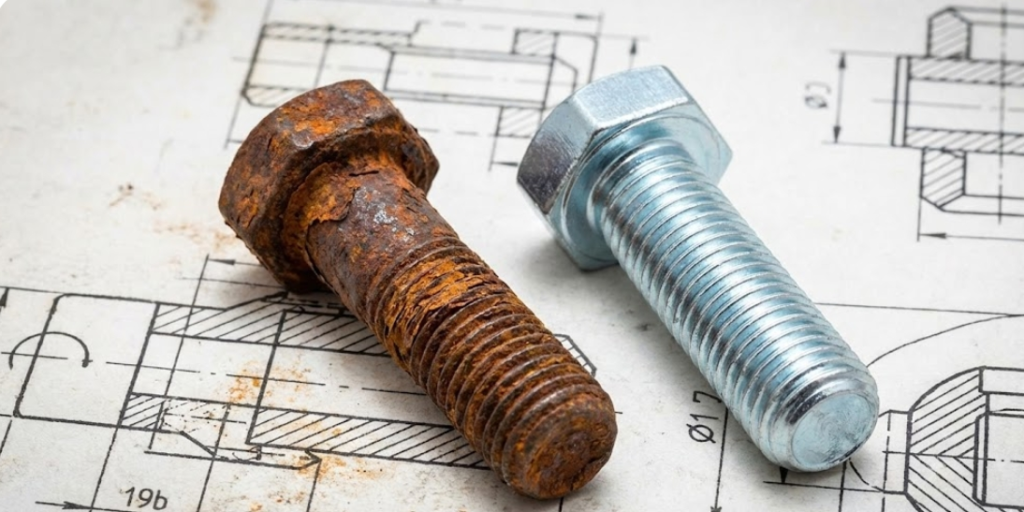
- Corrosion Failure: The bolt rusts away because the material grade was wrong for the environment.
- Project Delays: Waiting for replacement parts while a site sits idle.
To avoid this, you need to understand your options. Let’s break them down.
Deep Dive 1: The Industry Workhorse – ASTM A193 B7
If you are in oil, gas, or heavy industrial construction, this is likely the specification you see most often.
What is it?
ASTM A193 Grade B7 is a specification for high tensile alloy steel bolts, studs, and threaded rods intended for use in high-temperature or high-pressure service. It is made from Chromium-Molybdenum steel that has been quenched and tempered (heat-treated) to achieve tremendous strength.
Key Characteristics:
- Extreme Strength: It is significantly stronger than standard low-carbon steel bolts.
- High-Temperature Performance: It maintains its strength even at elevated temperatures (up to roughly 400°C – 450°C), making it ideal for pressure vessels, valves, and flanges.
- The “B7” Stamp: Genuine B7 fasteners must be stamped with “B7” and the manufacturer’s mark for traceability.
Best Used For: Heavy machinery, oil rigs, refinery piping, and structural steel connections demanding high loads.
Deep Dive 2: The Corrosion Shield – Stainless Steel Grades
When the environment attacks the fastener, you need stainless steel. But not all “stainless” is created equal. In the fastener world, two grades dominate:
1. Stainless Steel 304 (A2 Grade)
- The Standard: This is the most common commercial grade of stainless steel.
- Use Case: Excellent for general outdoor use, food processing environments, or areas with moisture but low chemical exposure.
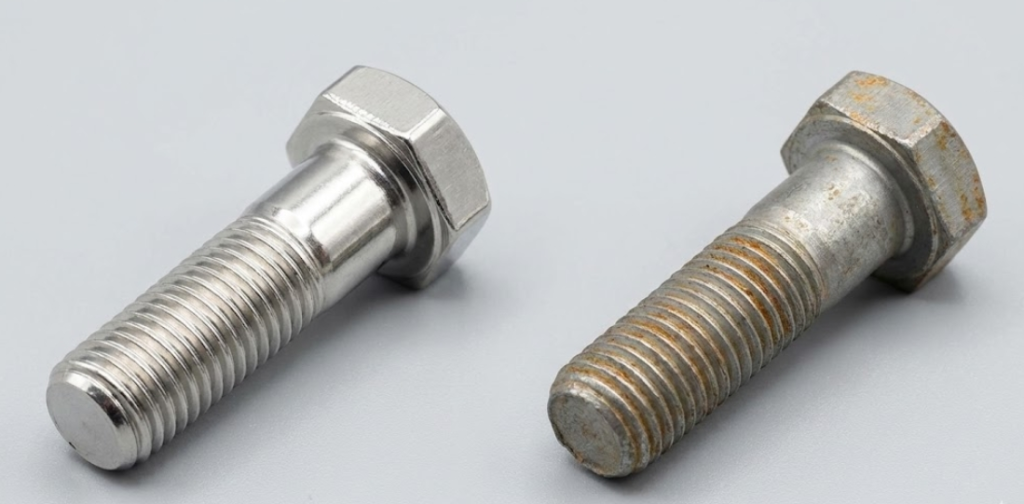
- Limitations: It will eventually show signs of rust in harsh marine (saltwater) environments or environments with high chlorides.
2. Stainless Steel 316 (A4 Grade)
- The Marine Grade: 316 contains added Molybdenum, which drastically increases its resistance to salt and chlorides.
- Use Case: Essential for offshore oil platforms, coastal construction, chemical plants, and submerged applications.
- The Rule of Thumb: If it’s near the ocean, demand 316 (A4).
Important Note: While stainless steel offers great corrosion resistance, it generally has lower tensile strength than alloy steels like A193 B7. Never swap B7 for Stainless without consulting an engineer.
Deep Dive 3: Understanding Tensile Strength Charts
How do you know if a bolt is strong enough? You look at its mechanical properties. This is often the most confusing part for buyers.
Here are the two terms you must know:
- Yield Strength: The amount of stress a bolt can handle before it permanently stretches and won’t return to its original shape.
- Tensile Strength (Ultimate): The maximum stress the bolt can handle before it completely snaps (fails).
Below is a simplified comparison chart showing why specifying the right grade matters immensely.
Simplified Fastener Strength Comparison
| Material / Grade | Tensile Strength (Min) | Typical Application |
| Low Carbon Steel (Grade 4.6) | ~400 MPa (58 ksi) | Non-critical, light-duty applications. |
| Stainless Steel 304 (A2-70) | ~700 MPa (100 ksi) | General corrosion resistance. |
| Stainless Steel 316 (A4-80) | ~800 MPa (115 ksi) | Marine corrosion resistance. |
| ASTM A193 B7 (Up to 2.5″) | ~860 MPa (125 ksi) | High pressure, high temp, heavy loads. |
Note: Values are approximate minimums and depend on diameter. MPa = Megapascals, ksi = kilopounds per square inch.
The takeaway: An A193 B7 bolt can handle more than double the load of a standard low-carbon bolt before failing.
The Solution: How Seven Horses International Ensures Compliance
Understanding these specs is half the battle. Ensuring you actually receive what you specified when importing from overseas is the other half.
At Seven Horses International, we bridge the gap between technical requirements and reliable supply. We don’t just shift boxes; we verify specifications.
Your Partner in Quality Control:
- MTC Verification: Every high-grade fastener we export is accompanied by a Mill Test Certificate (MTC) according to EN 10204 3.1. This document proves the chemical composition and tensile strength of the actual batch you receive.
- Positive Material Identification (PMI): For critical stainless steel orders (distinguishing 304 vs. 316), we can perform PMI testing with handheld X-ray guns to verify the alloy composition before shipment.
- Proper Marking: We ensure all B7 and high-grade fasteners are clearly stamped for traceability once they arrive on your site.
Conclusion
When it comes to heavy-duty fasteners, details matter. A slight miscalculation in grade selection can jeopardize an entire project.
Don’t navigate the complexities of international fastener sourcing alone. Whether you need the brute strength of A193 B7 or the harsh-environment resistance of Stainless Steel 316, rely on Seven Horses International to deliver the exact specifications your engineers demand.
Do you have an upcoming project requiring high-specification fasteners? Contact our technical sales team today for a consultation and quote.