Featured News

Featured News

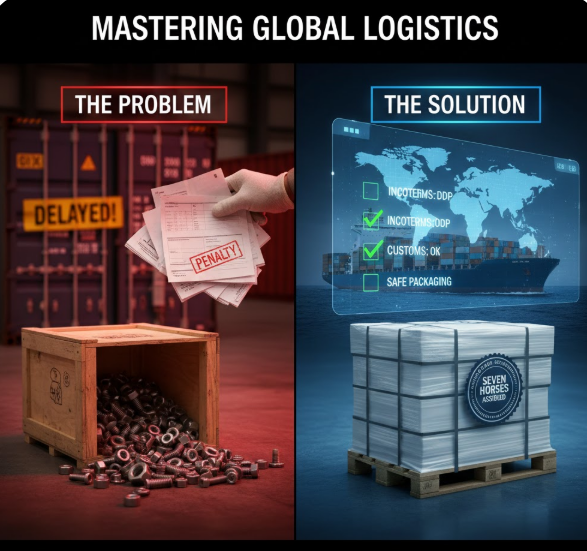
Mastering Global Logistics: The Buyer’s Guide to Incoterms, Customs, and Safe Shipping

Sourcing internationally offers incredible opportunities, but the logistics can be a minefield. Here is your essential guide to navigating the paperwork, costs, and physical risks of ocean freight so your goods arrive safely and on budget. Introduction: The Hidden Challenge of Global Sourcing You’ve found the perfect product. The quality is excellent, and the price is right. You are ready to place the order and grow your business. But then the real questions begin: International trade is more than just buying and selling; it’s about moving goods across borders, oceans, and jurisdictions. At Seven Horses International, we believe that logistics shouldn’t be a barrier to your success. A truly great export partner doesn’t just hand you the goods at their factory door and wish you luck. They guide you through the maze. This article breaks down the three pillars of successful importing: Incoterms, Customs Documentation, and Ocean-Ready Packaging. The Problem: Where International Orders Go Wrong When buyers underestimate the complexity of logistics, the consequences are expensive and frustrating. We have seen countless examples where excellent products turned into a disaster due to logistical oversights: These aren’t bad luck; they are preventable errors. The Solution: Your 3-Step Guide to Smooth Logistics Step 1: Decoding Incoterms (Who Pays for What?) Incoterms (International Commercial Terms) are three-letter codes published by the International Chamber of Commerce. They define exactly where the seller’s responsibility ends and the buyer’s begins regarding cost and risk. While there are 11 Incoterms, these four are the most critical for importers to understand: The Seven Horses Tip: We usually recommend FOB for experienced buyers who have their own freight forwarders, as it gives you control over shipping costs. For newer buyers, CIF can be easier as we handle the complex ocean journey for you. Step 2: Mastering Customs Documentation (The Paper Trail) Customs officials don’t care about your deadlines. They care about accurate paperwork. If the documents don’t match the cargo perfectly, your shipment stops moving. These are the non-negotiables for ocean freight: Document What it is & Why it’s Vital Commercial Invoice The “Bill.” It must show the exact value per unit, total value, currency, and Incoterm. Customs uses this to calculate duties. Packing List The “Inventory.” It details exactly how many boxes, weight (gross/net), and dimensions are in the shipment. It must match the physical cargo exactly. Bill of Lading (B/L) The “Ticket & Receipt.” This is the most important document. It proves ownership of the goods and acts as the contract with the shipping line. Certificate of Origin (COO) The “Passport.” Proves where the goods were made. This is crucial for claiming reduced duties under Free Trade Agreements between countries. Critical Focus: The HS Code. Every product has a Harmonized System code. Using the wrong code can lead to paying too much duty—or worse, heavy fines for misdeclaration. Step 3: Safe Ocean Freight Packaging (Surviving the Journey) The ocean is a hostile environment. Your goods will face constant vibration, stacking pressure from other pallets, and extreme humidity fluctuations. Standard domestic cardboard boxes will not survive. At Seven Horses International, we treat packaging as an engineering challenge, not an afterthought. Our Standard Protocol for Ocean Exports: For international buyers, seamless delivery is as crucial as product quality. Unlock the complexities of global logistics to ensure your fastener shipments arrive on time, intact, and compliant, with Seven Horses International. Introduction: The Invisible Bridges of Global Commerce In the intricate world of international trade, a high-quality product is only half the equation. The journey from the manufacturer’s floor to your project site involves a complex web of regulations, responsibilities, and risks. Understanding Incoterms, customs documentation, and safe ocean freight packaging isn’t just about efficiency; it’s about minimizing costs, avoiding delays, and ensuring the integrity of your valuable fastener shipments. For global buyers, navigating these logistical landscapes can be daunting. Errors can lead to significant financial penalties, extended transit times, and even damaged goods. At Seven Horses International, we don’t just supply superior fasteners; we provide a partnership that extends to mastering the intricacies of global logistics. This guide will clarify these essential components of successful international shipping. The Problem: When Logistical Lapses Lead to Costly Chaos Missteps in international shipping can quickly turn a profitable order into a logistical nightmare: Conclusion: Seven Horses International is Your Logistical Partner Don’t let the fear of logistics stop you from accessing global markets. The key is not knowing everything yourself; it is choosing a supplier who understands the entire process. At Seven Horses International, we don’t just manufacture products; we deliver solutions. When you partner with us, you aren’t just buying goods. You are securing a seamless supply chain. Are you ready to import with confidence? Contact our export specialists today to discuss your next project and let us handle the heavy lifting.
Featured News

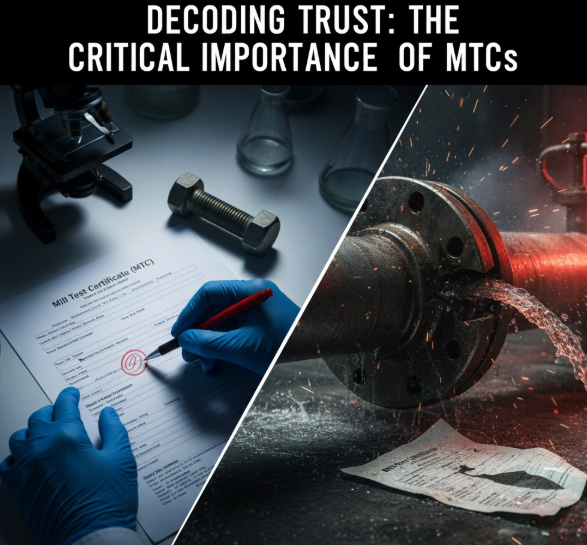
How to Read Mill Test Certificates (MTC) and Avoid Costly Disasters

In the world of critical fastening, a document can be as important as the bolt itself. Learn to expertly read MTCs and lab reports to ensure unwavering quality and compliance with Seven Horses International. Introduction: The Unseen Assurance of Quality Every critical fastener, from a high-tensile bolt in a wind turbine to a corrosion-resistant stud in a chemical plant, carries more than just its physical properties. It carries a story – a meticulously documented journey from raw material to finished product, validated by a Mill Test Certificate (MTC), often supported by detailed lab reports. For engineers and procurement professionals, an MTC isn’t just paperwork; it’s the passport of quality. It’s the definitive proof that a fastener meets the precise metallurgical, chemical, and mechanical specifications required for your project. Misinterpreting or overlooking these vital details can have severe consequences. At Seven Horses International, we believe in complete transparency and empower our clients with the knowledge to demand and verify the highest quality. Let’s demystify these crucial documents. The Problem: When Missing Details Lead to Major Risks Without the ability to correctly interpret an MTC or lab report, you’re essentially buying blind. This can lead to: The Solution: A Step-by-Step Guide to MTC Mastery A typical MTC (sometimes called a Material Test Report or MTR) contains several key sections. Here’s what to look for: 1. General Information & Identification 2. Chemical Composition 3. Mechanical Properties This section verifies the material’s strength and ductility through rigorous testing. 4. Heat Treatment Details 5. Additional Tests & Certifications Depending on the specific requirements, an MTC might also include: This is a complete, professionally structured blog post designed for your export business. It addresses the anxieties of international buyers and positions Seven Horses International as a technically competent, trustworthy partner. Global sourcing shouldn’t be a gamble. Learn to decode the most critical document in international trade to ensure you get the quality you paid for. The Paper That Proves the Product Imagine ordering a high-strength alloy steel bolt for a critical infrastructure project. It arrives looking shiny and perfect. But how do you know it won’t snap under pressure? You can’t tell the steel grade just by looking at it. In the world of international trade—especially when importing steel, fasteners, and industrial components from hubs like India—trust is good, but verification is essential. That verification comes in one crucial document: The Mill Test Certificate (MTC). Often treated as just another piece of annoying paperwork to be filed away, the MTC is actually the “passport” and “DNA report” of your product combined. Ignoring it is one of the biggest risks a procurement manager can take. At Seven Horses International, we believe an educated buyer is our best partner. This guide will move you from passively receiving MTCs to actively understanding them, ensuring the integrity of your supply chain. The Problem: When “Steel” Isn’t What It Seems Why does this matter so much? In the rush to meet deadlines and cut costs, many companies accept materials based on a supplier’s word. But if the material you receive doesn’t match the engineering specifications, the consequences can be catastrophic: If you don’t know how to read the lab report, you are flying blind. You are trusting a distant factory with your company’s reputation. The Golden Rule: Never allow material onto your production floor until its MTC has been verified against your purchase order requirements. The Solution: Anatomy of an MTC (A Step-by-Step Guide) Most high-quality international exports will provide an EN 10204 Type 3.1 Certificate. This means the test results were validated by the manufacturer’s authorized inspection representative, independent of the manufacturing department. Let’s break down a typical fastener MTC into its four critical zones. (Note: While layouts vary, these elements must be present.) Zone 1: The Header & Traceability (The “Who & What”) This section connects the paperwork to the physical product. Zone 2: Chemical Composition (The “Recipe”) This is the “ingredients list” of the steel, usually presented as percentages. Small changes here drastically alter performance. Action Tip: Compare these percentages against the standard (e.g., an ASTM or ISO spec sheet). If the standard requires minimum 16% Chromium for stainless 316, and the MTC shows 14%, reject it. Zone 3: Mechanical Properties (The “Performance”) This is what engineers care about most. It tells you how the material behaves under stress. Property What it Means in Simple Terms Why it Matters Tensile Strength (Rm) The maximum stress the material can take before it snaps. Determines the ultimate load capacity. Yield Strength (Re/Rp0.2) The point where the material stretches permanently and won’t snap back. Crucial for design—you never want to exceed this in operation. Elongation (A%) How much it stretches before breaking. Indicates ductility. Low elongation means it’s brittle and might snap suddenly. Hardness (HB/HRC) Resistance to denting or scratching. Important for wear resistance and verifying heat treatment. Zone 4: Validation & Standards The final check. Red Flags: How to Spot a Fake or “Lazy” MTC Unfortunately, fraudulent or doctored MTCs exist in the global market. When reviewing a document sent by a new supplier, look for these warning signs: The Seven Horses International Advantage: We Read It For You We know that as a procurement manager or business owner, you don’t have time to become a metallurgist. This is where Seven Horses International transforms from a supplier into a partner. When you source fasteners and forged components from India through us, you aren’t just getting the product; you are getting a technical firewall. We take the guesswork out of global sourcing, ensuring that the “steel on the paper” matches the “steel in the box.” Are you looking for a reliable partner for your next requirement of industrial fasteners or forged components from India? [Contact Seven Horses International Today] for a quote, and experience the difference of working with a supplier who prioritizes technical integrity.

Featured News

The Engineer’s Guide to Heavy-Duty Fasteners: Mastering ASTM A193 B7, Stainless Steel, and Tensile Strength

Don’t gamble with specifications. Understand the critical differences in fastener grades to ensure the safety and longevity of your global projects. Introduction: When “Good Enough” Isn’t Enough In high-stakes industries—oil and gas, heavy construction, marine infrastructure—a fastener is never just a “nut and bolt.” It is a critical safety component. The integrity of a multimillion-dollar pipeline or a massive steel structure often literally hangs by the threads of the fasteners holding it together. At Seven Horses International, we understand that our clients aren’t just buying steel; they are buying peace of mind. When sourcing fasteners globally, the alphabet soup of standards (ASTM, ISO, DIN) can be overwhelming. But getting it wrong leads to catastrophic failures, costly delays, and massive liability. This guide dives deep into the three most critical aspects of specifying heavy-duty fasteners: the workhorse ASTM A193 B7, the corrosion-resistant Stainless Steel grades, and understanding Tensile Strength charts. The Challenge: Navigating “Spec Confusion” The most common problem we see in international procurement is mismatching the fastener grade to the environment. A procurement manager might order a “high-strength bolt,” not realizing that a standard Grade 8.8 bolt will corrode rapidly in a saltwater environment where Stainless Steel 316 is required. Conversely, an engineer might specify Stainless Steel for a high-temperature pressure vessel, not realizing it lacks the necessary tensile strength at high heat that A193 B7 provides. The Consequence of Failure: To avoid this, you need to understand your options. Let’s break them down. Deep Dive 1: The Industry Workhorse – ASTM A193 B7 If you are in oil, gas, or heavy industrial construction, this is likely the specification you see most often. What is it? ASTM A193 Grade B7 is a specification for high tensile alloy steel bolts, studs, and threaded rods intended for use in high-temperature or high-pressure service. It is made from Chromium-Molybdenum steel that has been quenched and tempered (heat-treated) to achieve tremendous strength. Key Characteristics: Best Used For: Heavy machinery, oil rigs, refinery piping, and structural steel connections demanding high loads. Deep Dive 2: The Corrosion Shield – Stainless Steel Grades When the environment attacks the fastener, you need stainless steel. But not all “stainless” is created equal. In the fastener world, two grades dominate: 1. Stainless Steel 304 (A2 Grade) 2. Stainless Steel 316 (A4 Grade) Important Note: While stainless steel offers great corrosion resistance, it generally has lower tensile strength than alloy steels like A193 B7. Never swap B7 for Stainless without consulting an engineer. Deep Dive 3: Understanding Tensile Strength Charts How do you know if a bolt is strong enough? You look at its mechanical properties. This is often the most confusing part for buyers. Here are the two terms you must know: Below is a simplified comparison chart showing why specifying the right grade matters immensely. Simplified Fastener Strength Comparison Material / Grade Tensile Strength (Min) Typical Application Low Carbon Steel (Grade 4.6) ~400 MPa (58 ksi) Non-critical, light-duty applications. Stainless Steel 304 (A2-70) ~700 MPa (100 ksi) General corrosion resistance. Stainless Steel 316 (A4-80) ~800 MPa (115 ksi) Marine corrosion resistance. ASTM A193 B7 (Up to 2.5″) ~860 MPa (125 ksi) High pressure, high temp, heavy loads. Note: Values are approximate minimums and depend on diameter. MPa = Megapascals, ksi = kilopounds per square inch. The takeaway: An A193 B7 bolt can handle more than double the load of a standard low-carbon bolt before failing. The Solution: How Seven Horses International Ensures Compliance Understanding these specs is half the battle. Ensuring you actually receive what you specified when importing from overseas is the other half. At Seven Horses International, we bridge the gap between technical requirements and reliable supply. We don’t just shift boxes; we verify specifications. Your Partner in Quality Control: Conclusion When it comes to heavy-duty fasteners, details matter. A slight miscalculation in grade selection can jeopardize an entire project. Don’t navigate the complexities of international fastener sourcing alone. Whether you need the brute strength of A193 B7 or the harsh-environment resistance of Stainless Steel 316, rely on Seven Horses International to deliver the exact specifications your engineers demand. Do you have an upcoming project requiring high-specification fasteners? Contact our technical sales team today for a consultation and quote.

Featured News

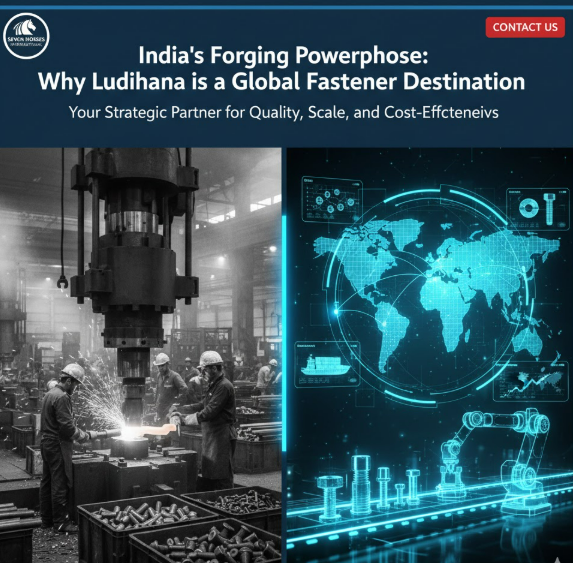
India’s Forging Powerhouse: Why Ludhiana is a Global Fastener Destination

When global buyers look for reliability, scale, and cost-effectiveness in fastener manufacturing, their search often leads to India. And within India, one name consistently rises to the top: Ludhiana. Located in the state of Punjab, Ludhiana isn’t just a city; it’s a colossal forging and manufacturing hub, a dynamic ecosystem where precision engineering meets high-volume production. At Seven Horses International, we have deep roots in this region, connecting international clients directly to the heart of India’s fastener industry. The Challenge: Finding a Reliable & Integrated Manufacturing Ecosystem Sourcing industrial fasteners, especially those requiring complex forging, often presents a dilemma for global buyers: These challenges underscore the need for a highly integrated and reliable manufacturing environment. This is precisely where Ludhiana shines. The Solution: Ludhiana – India’s Powerhouse Forging Hub Ludhiana’s emergence as a global fastener manufacturing destination is no accident. It’s the result of decades of industrial development, strategic location, and a unique combination of factors that create an unparalleled ecosystem for precision forging and fastener production. 1. An Integrated Forging & Fastener Ecosystem Unlike regions where production is fragmented across distant cities, Ludhiana offers a tightly integrated ecosystem. The city is unique because the entire supply chain exists within a tight radius. You have easy access to high-grade raw steel (secondary and primary markets), world-class tool and die makers, massive forging units equipped with both hammer and heavy-duty presses, specialized heat treatment facilities, and advanced plating/coating centers. For a buyer, this “all-under-one-roof” capability means drastically reduced lead times, tighter quality control at every production stage, and lower transportation costs between processes. 2. A Legacy of Engineering and Skilled Workforce Ludhiana is often called the “Manchester of India” due to its industrial might. For generations, the city has been the hub for manufacturing bicycles, automotive components, and textile machinery. This history means engineering is in the city’s DNA. The workforce here is highly skilled in metallurgy, machining, and complex forging techniques. They understand tolerances, tensile strength requirements, and the critical nature of industrial fasteners. When you source from Ludhiana, you aren’t just buying a product; you are accessing a deep pool of generational technical knowledge. 3. Infrastructure Geared for Global Export While Ludhiana is inland, its infrastructure is designed for international trade. The city boasts sophisticated Inland Container Depots (dry ports) with direct rail connectivity to India’s major sea ports, such as Mundra and Nhava Sheva. This ensures that once your fasteners are manufactured, packaged, and inspected, they move swiftly and efficiently to the port for global shipping, minimizing transit delays. Your Partner on the Ground: Seven Horses International While Ludhiana offers immense potential, navigating such a vast industrial landscape can be daunting for an outsider. Identifying the right manufacturer with the right certifications (ISO, CE, etc.) among thousands of workshops is challenging. This is where Seven Horses International bridges the gap. We act as your eyes and ears on the factory floor. We don’t just find suppliers; we vet them, conduct in-process quality inspections, ensure export-grade packaging, and manage the logistics. We turn the complex ecosystem of Ludhiana into a streamlined, reliable supply chain for your business. Are you ready to tap into the manufacturing power of Ludhiana? Contact Seven Horses International today to discuss your fastener requirements.

Featured News

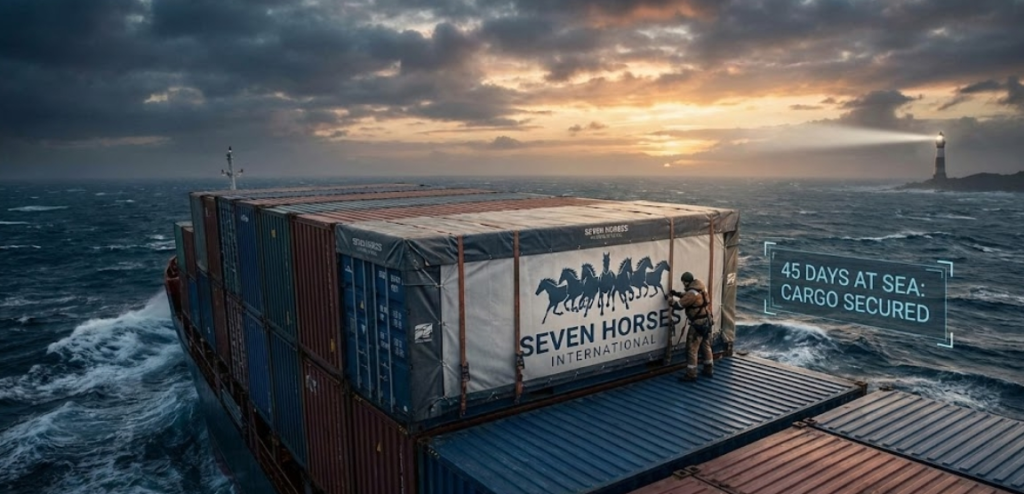
How Seven Horses Ensures Your Cargo Survives 45 Days at Sea

The 45-Day Danger Zone You’ve spent weeks negotiating prices. You’ve approved the samples. The Mill Test Certificates look perfect. The bolts leave the factory in India looking shiny and new. But then, they enter the “Danger Zone”—a 45-day ocean voyage inside a sealed shipping container. During this trip, your cargo faces: If your supplier skimps on packaging, you don’t just get wet boxes. You get White Rust (zinc corrosion) or Red Rust (steel corrosion). The result? Rejected shipments, project delays, and thousands of dollars in losses. At Seven Horses International, we believe that packaging is a feature, not an afterthought. Here is exactly how we engineer our packaging to survive the ocean. Step 1: The First Line of Defense – VCI Technology Target Keyword: Preventing rust during shipping We don’t just throw bolts into a cardboard box. Every export shipment begins with VCI (Volatile Corrosion Inhibitor) protection. [Insert Image Placeholder: Close up of bolts being packed into blue/yellow VCI bags] Step 2: Mechanical Protection – Heavy-Duty Cartons & Sacks Fastener export packaging Once the chemical barrier is set, we focus on physical strength. Fasteners are heavy—a small box can weigh 25kg (55 lbs). Cheap cardboard bursts under this weight. Step 3: The Fortress – Wooden Crates & Fumigation Fumigated pallets for export This is where many exporters fail. They use raw timber that gets rejected by Customs in the USA or Europe due to pest regulations (ISPM-15). At Seven Horses International, we strictly adhere to ISPM-15 Standards. [Insert Image Placeholder: A fully packed wooden crate, shrink-wrapped and strapped, sitting on a warehouse floor] Step 4: Container Logic – Loading for Stability Target Keyword: Sea freight packaging standards The final step is how we load the container. A poorly loaded container shifts during rough seas, causing crates to smash into each other. Why This Matters to You When you buy from Seven Horses International, you aren’t just paying for the steel. You are paying for the guarantee that what you ordered is what you receive. Don’t let 45-day sea voyage ruin months of hard work. Let us handle the manufacturing and the protection of your critical components and a 5-cent saving on packaging cost you a $50,000 shipment. Ready to import with confidence? Contact Seven Horses International today and ask about our export-grade packaging standards.

Featured News

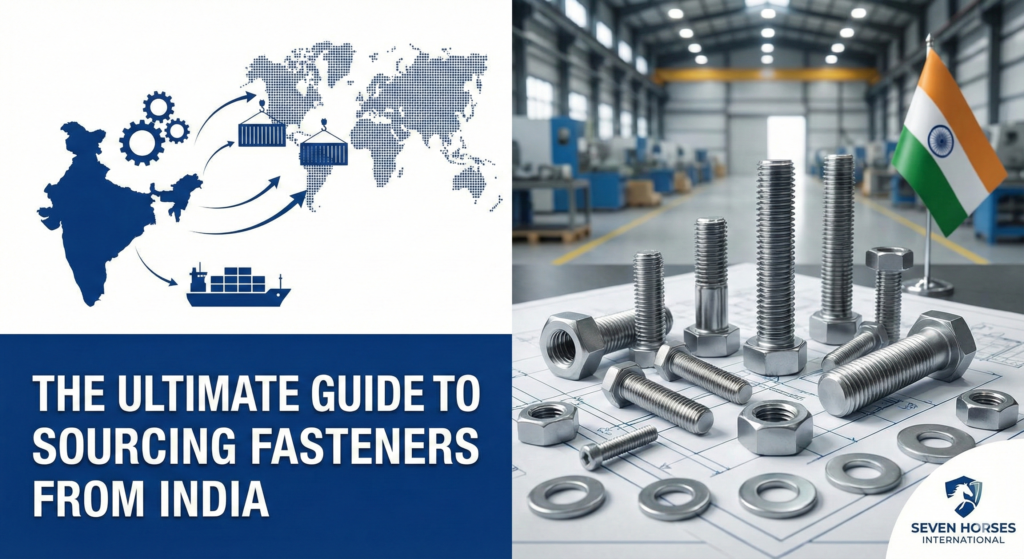
The Ultimate Guide to Sourcing Fasteners from India

Why Global Supply Chains Are Shifting, How to Navigate the Market. Introduction: The Global Shift is Underway For the last two decades, the answer to “Where should I buy fasteners?” was almost always China. But the world has changed. Between geopolitical tensions, fluctuating tariffs, and supply chain instability, global procurement managers are scrambling for a “China Plus One” strategy. Enter India. India is no longer just a backup option; it is rapidly becoming the primary hub for high-tensile and precision fasteners. With access to premium raw steel (Tata, JSW), a skilled English-speaking workforce, and massive government infrastructure investment, India is ready. But sourcing from a new country can be daunting. How do you find reliable manufacturers? What about customs? How do you ensure the steel quality? This guide covers everything you need to know to successfully import industrial fasteners from India. The Challenge: Navigating a Complex Global Supply Chain International buyers often face significant hurdles when sourcing industrial fasteners: Part 1: Why the World is shifting to India (The “Why”) It’s not just about price anymore; it’s about stability. Part 2: The Sourcing Checklist (The “How”) Before you sign a contract, you need to vet your potential partner. Here is the checklist professional buyers use. 1. Verify the “Mill to Machine” Traceability Don’t just ask for a finished bolt; ask where the steel came from. 2. Audit the “In-House” Capabilities Many “manufacturers” are actually just traders who buy from small workshops and re-sell. 3. Inspect the Packaging Standards The ocean is cruel to steel. “Container Rain”—condensation inside shipping containers—can rust an entire shipment before it arrives. Part 3: Logistics & Customs Cheat Sheet Importing doesn’t have to be a headache if you have the right paperwork. Common HS Codes for Fasteners: The “Must-Have” Document Packet: Part 4: How Seven Horses International Solves the “Trust Gap” n today’s globalized market, efficient and cost-effective sourcing is paramount for industries ranging from construction and infrastructure to automotive and heavy machinery. When it comes to industrial fasteners – the critical components that hold our world together – India has emerged as a powerhouse, offering a compelling blend of quality, capacity, and competitive pricing. At Seven Horses International, we specialize in bridging the gap between India’s robust manufacturing capabilities and global demand. This guide will walk you through why sourcing industrial fasteners from India is a strategic move and how to navigate this vibrant market for optimal results. We built Seven Horses International to bridge the gap between Indian manufacturing excellence and global buying standards. We know that you aren’t just buying a bolt; you are buying trust. Here is our promise to you:

Featured News

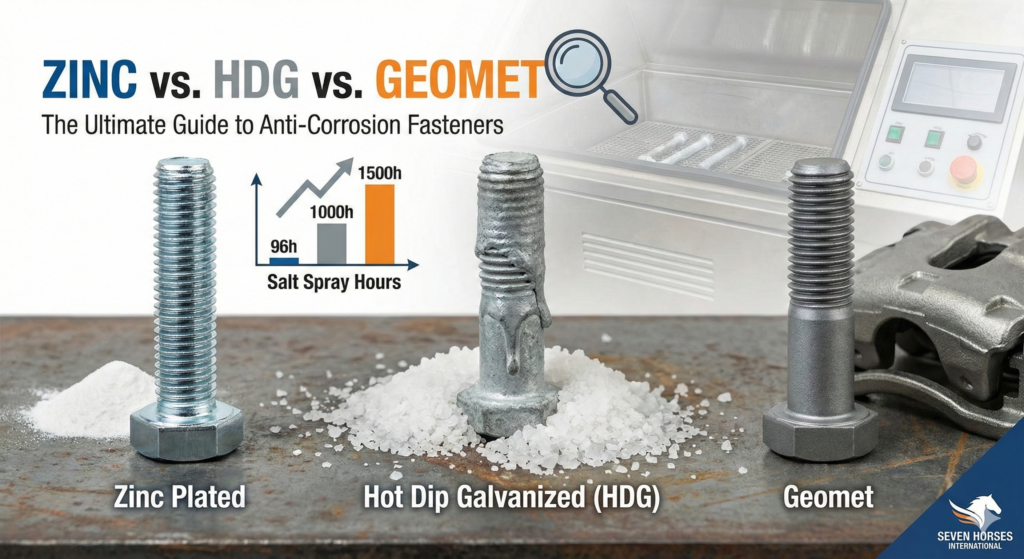
Zinc vs. Hot Dip Galvanizing (HDG) vs. Geomet: The Ultimate Guide to Anti-Corrosion Fasteners

How to choose the right coating for your project, prevent catastrophic failure, and why “shiny” doesn’t always mean “strong.” The Hidden Cost of the Wrong Choice Corrosion isn’t just an eyesore; it’s a financial disaster waiting to happen. Did you know that corrosion costs the global economy over $2.5 trillion annually? For a procurement manager or project engineer, the nightmare scenario is simple: You specify a fastener for a solar farm or a bridge. Two years later, the bolts are seizing up with red rust. Maintenance costs skyrocket, and your reputation takes a hit. The problem? One size does not fit all. A coating that works perfectly for a car engine (Zinc Flake/Geomet) might be a disaster for a marine dock (HDG). And a coating that looks beautiful on a shelf (Zinc Plated) might dissolve in weeks outdoors. At Seven Horses International, we believe in engineering the right solution for your environment. Here is the definitive breakdown of the three titans of fastener coatings: Zinc Plating, Hot Dip Galvanizing, and Geomet. 1. Zinc Plating (Electro-Galvanized) The “Indoor” Standard Zinc plating is the most common fastener coating in the world. It involves using an electrical current to deposit a thin layer of zinc onto the steel surface. Pro Tip: Never use standard Zinc Plated bolts for critical outdoor infrastructure. They will rust. 2. Hot Dip Galvanizing (HDG) The “Heavyweight Champion” If Zinc Plating is a light raincoat, Hot Dip Galvanizing is a suit of armor. In this process, fasteners are dipped into a bath of molten zinc at 450°C (840°F). 3. Geomet (Zinc Flake Coating) The “High-Tech” Performer Geomet (a brand of Zinc Flake coating) is the modern answer to high-performance demands. It uses zinc and aluminum flakes dissolved in a solvent, applied via a dip-spin process, and baked onto the fastener. The Decision Matrix: Compare at a Glance Stop guessing. Use this table to match the coating to your project needs. Feature Zinc Plated (White/Blue) Hot Dip Galvanized (HDG) Geomet (Zinc Flake) Typical Thickness 3 – 12 Microns (Thin) 40 – 85 Microns (Thick) 8 – 12 Microns (Thin) Salt Spray Life (SST) 24 – 96 Hours 500 – 1000+ Hours 1000 – 1500+ Hours Process Temp Cold (Electrolytic) Hot (~450°C) Warm Cure (~300°C) Hydrogen Embrittlement Risk HIGH (Requires baking) HIGH (Acid pickling risk) ZERO (Safe for Grade 12.9) Thread Fit Perfect Requires Oversize Nuts Good Cost Low Medium High For global buyers in construction, marine, infrastructure, or any industry where fasteners face harsh environmental conditions, choosing the right protective coating is as crucial as selecting the right material. When your fasteners embark on a long journey across the ocean, or are destined for corrosive outdoor applications, the coating becomes their first, and often last, line of defense against rust. The two most common choices are Zinc Plating and Hot Dip Galvanizing (HDG). At Seven Horses International, we understand the critical difference these coatings make. This guide will help you navigate the complexities, ensuring your fasteners arrive, and remain, uncompromised, even after surviving the brutal gauntlet of ocean freight. Zinc Plated vs. Hot Dip Galvanizing (HDG): Which Coating Survives Ocean Freight? Protecting Your Fasteners From The Ultimate Corrosive Challenge For global buyers in construction, marine, infrastructure, or any industry where fasteners face harsh environmental conditions, choosing the right protective coating is as crucial as selecting the right material. When your fasteners embark on a long journey across the ocean, or are destined for corrosive outdoor applications, the coating becomes their first, and often last, line of defense against rust. The two most common choices are Zinc Plating and Hot Dip Galvanizing (HDG). At Seven Horses International, we understand the critical difference these coatings make. This guide will help you navigate the complexities, ensuring your fasteners arrive, and remain, uncompromised, even after surviving the brutal gauntlet of ocean freight. The Challenge: Rust and Corrosion – The Silent Destroyer of Fasteners Imagine receiving a shipment of fasteners, only to find them already marred by rust, even before installation. Or worse, witnessing premature corrosion of critical components just months after deployment in a marine environment. The Challenge: Rust and Corrosion – The Silent Destroyer of Fasteners Imagine receiving a shipment of fasteners, only to find them already marred by rust, even before installation. Or worse, witnessing premature corrosion of critical components just months after deployment in a marine environment. How Seven Horses International Ensures You Get What You Pay For The global market is flooded with “fake” coatings—fasteners that look like Geomet but are just silver paint, or “HDG” bolts that are barely thicker than zinc plating. At Seven Horses International, we function as your technical firewall against low quality. 1. We Verify the Microns We use digital coating thickness gauges on every batch. If you order HDG, we guarantee the ASTM A153 minimum (usually 43-53 microns depending on size). You get a report proving it. 2. The Salt Spray Chamber Test We don’t guess lifespan; we prove it. 3. Thread Fitment Guarantees Nothing is worse than a nut that won’t spin. For our HDG orders, we meticulously check the thread fit of the oversized nuts after galvanizing to ensure smooth assembly on your job site. The Bottom Line Don’t let corrosion eat your profits. Partner with an exporter who understands the chemistry behind the hardware. Contact Seven Horses International today for a technical consultation on your next project’s coating requirements.

Featured News

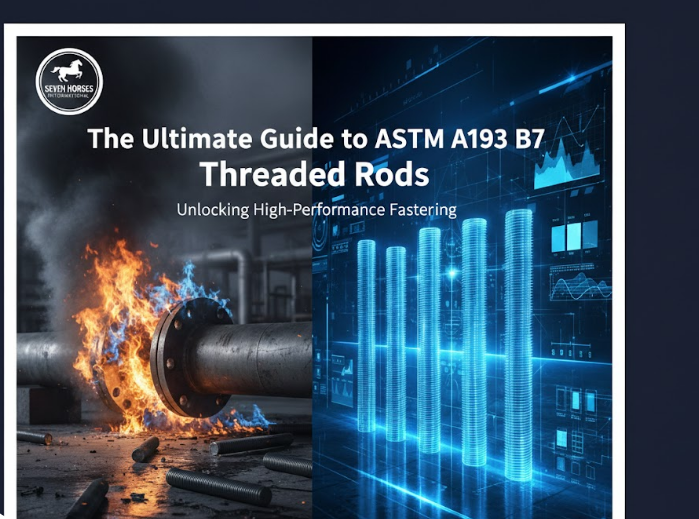
The Ultimate Guide to ASTM A193 B7 Threaded Rods: Unlocking High-Performance Fastening

Why ASTM A193 B7 Threaded Rods Are the Backbone of Heavy Industry In the demanding worlds of oil & gas, petrochemical, and heavy construction, fasteners are not merely components; they are critical links that ensure safety, structural integrity, and operational longevity. Among the vast array of industrial fasteners, ASTM A193 B7 threaded rods stand out as a cornerstone for high-temperature and high-pressure applications. At Seven Horses International, we understand that for global buyers, specifying and sourcing the correct B7 threaded rod is paramount. This guide will demystify B7, explain its importance, and illustrate why it’s a non-negotiable choice for your most critical projects. Whether you are an engineer designing a pressure vessel or a procurement manager looking to source High Tensile Studs, understanding the mechanics and sourcing realities of B7 rods is critical. Here is everything you need to know. What is an ASTM A193 B7 Threaded Rod? The ASTM A193 specification covers alloy and stainless steel bolting materials tailored for high-temperature or high-pressure service. The “B7” grade specifically refers to fasteners made from Chromium-Molybdenum (Chromoly) steel—typically AISI 4140 or 4142. To achieve its legendary strength, the raw steel undergoes a rigorous heat-treatment process: it is quenched in oil and then tempered at a specific temperature (minimum 1150°F / 620°C). This process aligns the molecular structure of the steel, providing the perfect balance of extreme hardness and the ductility required to stretch without snapping. The Technical Edge: Mechanical Properties of B7 Why do engineers specifically write “B7” into their blueprints? It comes down to the numbers. The mechanical properties of a fastener dictate how much load it can bear before it permanently deforms (Yield Strength) or breaks entirely (Tensile Strength). Here is the critical data you need for standard B7 threaded rods (for diameters 2½ inches and under): Property Minimum Requirement What It Means for You Tensile Strength 125,000 psi (125 ksi) The maximum amount of pulling stress the rod can withstand before failing. Yield Strength 105,000 psi (105 ksi) The exact point where the rod will bend or stretch and not return to its original shape. Elongation 16% A measure of ductility; how much the material can stretch before breaking, preventing sudden, brittle snapping. Hardness 321 HBW / 35 HRC (Maximum) Ensures the surface is hard enough to resist wear and maintain thread integrity under heavy torque. The Challenge: Fastener Failure in Extreme Environments Imagine a flange connection in a refinery operating under immense pressure and extreme temperatures, or a critical structural support in a power plant. What happens if the threaded rod holding these components together fails? The consequences can be catastrophic: A single point of failure can jeopardize entire operations. In high-pressure, high-temperature environments, the integrity of every fastener is critical. B7 threaded rods are specifically designed to prevent these failures, but to specify and manufacture them correctly requires deep expertise. The Solution: The Unmatched Performance of ASTM A193 B7 Threaded Rods ASTM A193 Grade B7 specifies alloy steel bolts and studs for high-temperature or high-pressure service. This material is renowned for its exceptional strength, temperature resistance, and durability, making it the industry standard for demanding applications. Enter Seven Horses International: Your Trusted Sourcing Partner At Seven Horses International, we don’t just export fasteners; we export peace of mind. We understand that when you order ASTM A193 B7 Threaded Rods, you are trusting us with the safety of your infrastructure. Here is how we eliminate your sourcing risks: 1. We Don’t Guess; We Test (In-House Quality Assurance) We know that in your industry, trust is built on data. Every batch of B7 rods we produce is backed by rigorous testing. (Insert your previously generated image of the Indian workers in the Quality Assurance Lab here) 2. Export-Grade Packaging (Zero Transit Damage) A perfectly manufactured thread is useless if it gets dented in a shipping container. At Seven Horses International, we treat packaging with the same precision as manufacturing. (Insert your previously generated image of the export packaged threaded rods on the forklift here) We use heavy-duty, reinforced wooden crates specifically designed for international sea freight. The rods are securely bundled, wrapped to prevent moisture corrosion (rust), and locked in place. When the container arrives at your facility in the USA, Europe, or the Middle East, the rods are in the exact pristine condition as when they left our factory. Ready to Secure Your Supply Chain? Stop gambling with unverified suppliers. Partner with a B7 Rod Manufacturer in India that prioritizes precision, transparent testing, and secure logistics.

Scroll to Top